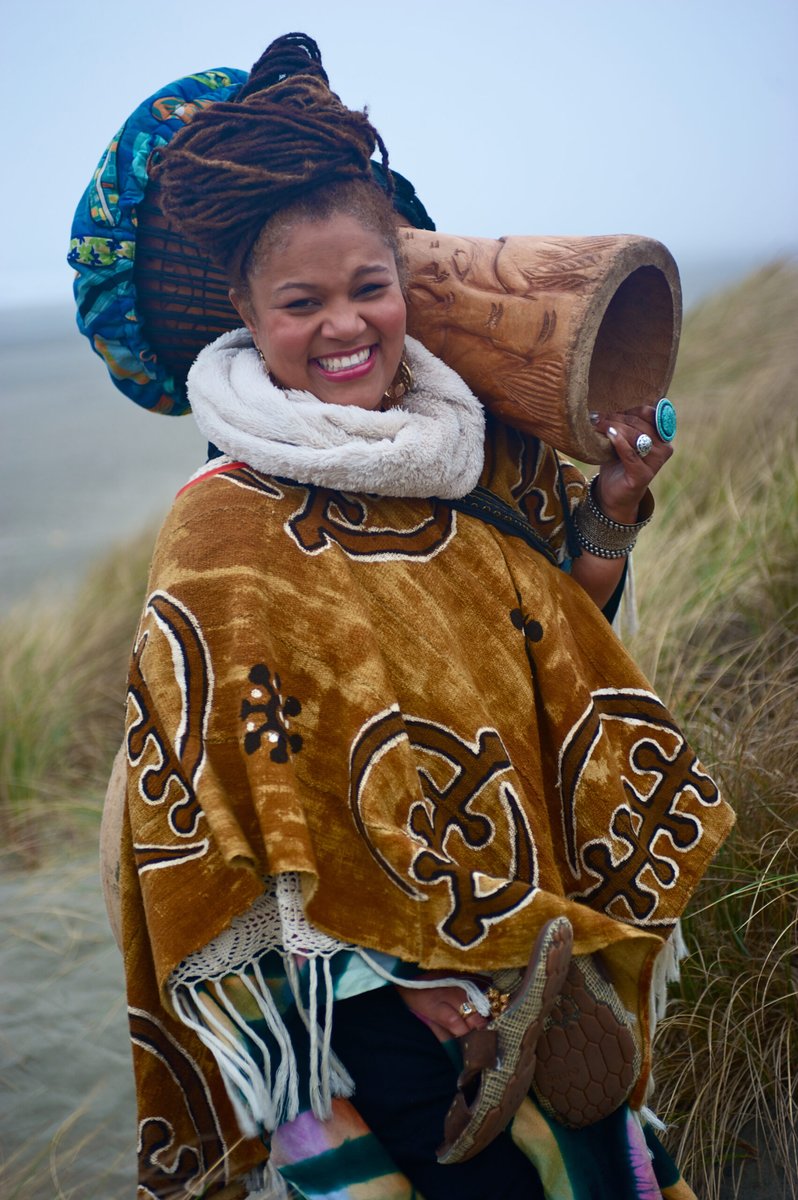
About Ami

The voice I lost, and the way back.

I am a vocalist who lost her voice — first as a child who learned that being quiet was safer, and again, later, in a way I almost didn't survive. Almost thirty years of this work have grown out of the way back.

I learned early that my voice could be dangerous — not to others, but to the people I loved. So I did what many of us do: I made myself smaller. I kept the peace by swallowing my own sound.

Then, in 2003, I survived a hate crime that should have ended my life. Months in a burn unit. Doctors who told me I would not walk again. And in the middle of all that pain, when the words were gone, friends came and played — and something in me began to hum. Not beautifully. Not on purpose. Just a sound that needed to come out. That sound was the beginning of my way back.

I am not speaking to you from hope. I am speaking from the other side of survival. That distinction is the whole of what I teach: the voice is not a performance you have to earn. It is the oldest medicine you own, and it was never taken from you — only set down.
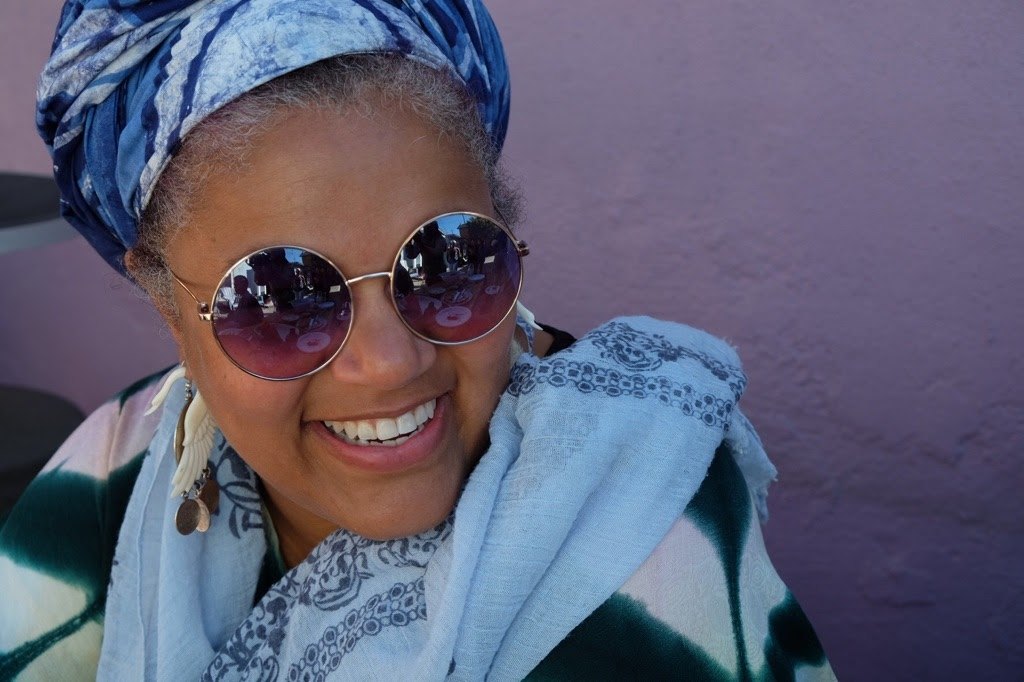
Amikaeyla wearing a blue tie-dyed turban and round purple sunglasses, smiling against a lavender wall
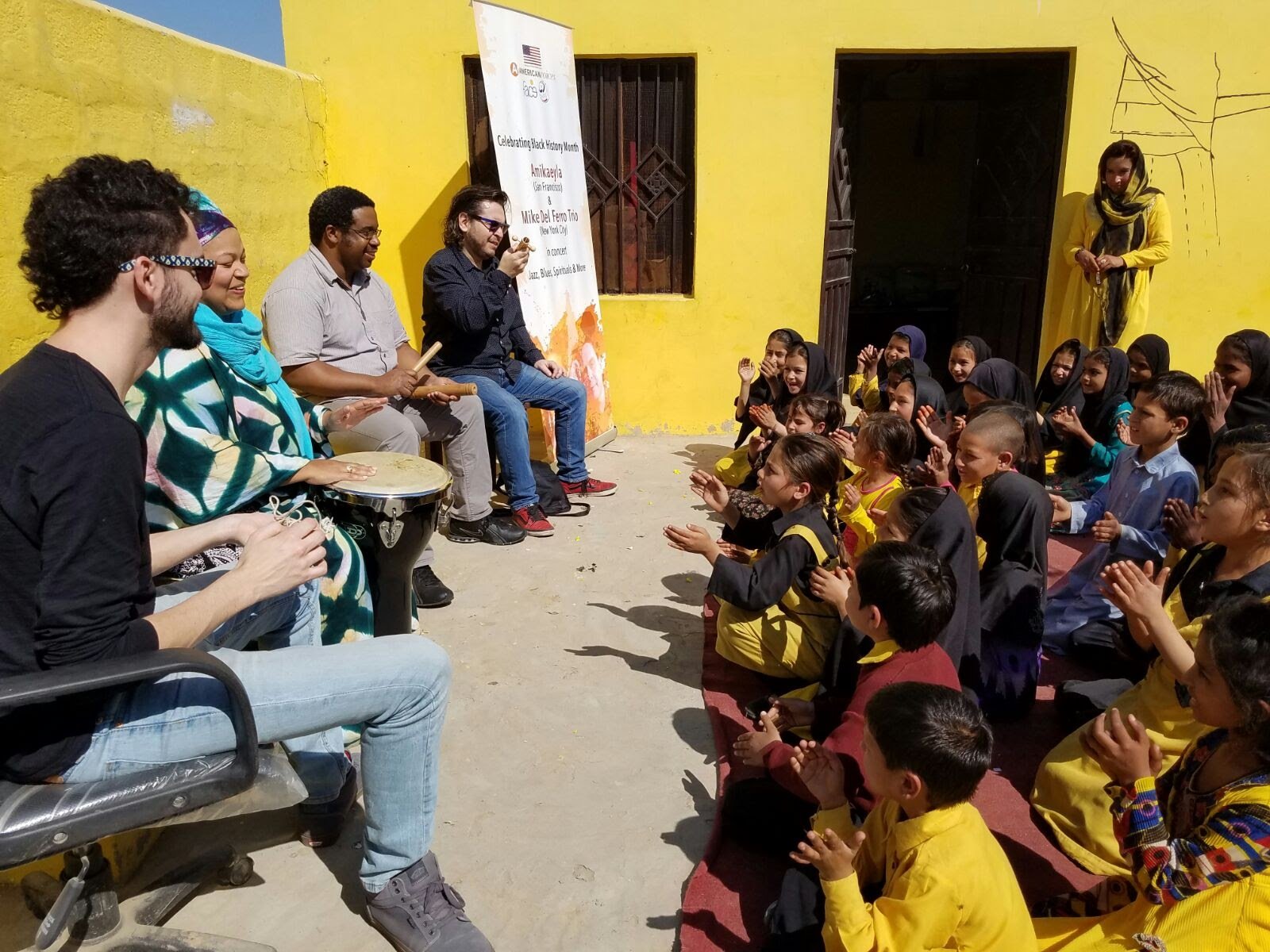
Amikaeyla and her band performing for schoolchildren in Pakistan, seated against a yellow wall

The work

What grew out of the recovery.

The Heart Voice Method is the part of that recovery that can be taught — a neuroscience-informed practice that uses voice, breath, and shared sound to settle the nervous system and bring people back to themselves. When you hum, tone, or chant, the vibration moves through your own body and reaches the vagus nerve, the pathway that carries you home to calm. It is one of the few things that quiets the body from the inside, with no device and nothing to buy. What traditional cultures have always known, the science now describes.

I have carried this work into refugee camps, hospitals, conflict zones, festival fields, universities, and conference halls across five continents — alongside collaborators including Bobby McFerrin, and through cultural exchange and citizen diplomacy with organizations including UNHCR and the U.S. State Department. Every time, in every language, the same thing happens: a person remembers that their sound belongs to them. Something releases. Something returns.

Amikaeyla seated with a djembe drum, in warm portrait light

Lineage

Where I come from.

I come from a family that understood service. My mother, Dr. Marilyn Hughes Gaston, spent her life in medicine and public health, in service to communities the system overlooked. I went looking for the same thing in a different instrument — the voice — and found that sound could reach places medicine alone could not.

Today I am the founder of the Heart Voice Method, Executive Director of the International Cultural Arts & Healing Sciences Institute, and a board member of Women's Drummers International. My debut album, Mosaic, earned eight Washington Area Music Association Awards. NPR has called mine one of the purest contemporary voices. But the credential I trust most is the one I earned face to face — in the rooms where people were barely holding on, and found their way back through sound.

What's coming

Being Beyond.

I'm at work on a book — Being Beyond — about what it means to build a life on the other side of survival, and how sound carries us there. When it lands, the people in this room will be the first to know.

The voice is the most democratic instrument on earth. Nobody bought it. Nobody can take it away.